One Gel. Every Cell.
Endless Possibilities
A technology platform for high-sensitivity detection of targeted rare
cell populations directly from whole blood, designed for clinical and
translational applications.
One Gel. Every Cell.
Endless
Possibilities
A technology platform for high-sensitivity detection of targeted rare cell populations directly from whole blood, designed for clinical and translational applications.
01
Patented Hydrogel Matrix
A transparent 3D matrix engineered for whole blood capture.
01
Patented Hydrogel Matrix
A transparent 3D matrix engineered for whole blood capture.
A volumetric, optically clear hydrogel that immobilizes cells directly from whole blood, preserving morphology and enabling consistent downstream imaging.
02
Detection
Reliable detection of rare cell events across millions of cells.
02
Ultra-High Sensitivity
Detection
Reliable detection of rare cell events across millions of cells.
In situ capture preserves cellular structure and spatial context, enabling detection of targeted rare cell populations without enrichment bias.
03
Workflow
From blood draw to imageable specimen.
03
Workflow
From blood draw to imageable specimen.
A streamlined, device-free workflow with minimal hands-on time, designed for consistent, scalable processing across samples.
04
Built for Clinical &
Research Applications
One platform. Multiple applications.
04
Built for Clinical &
Research Applications
One platform. Multiple applications.
Supports cancer surveillance, treatment monitoring, and drug development through reliable detection of defined cell populations.
The cellular future of liquid biopsy starts in one gel, transforming hidden rare cells into clinical foresight.
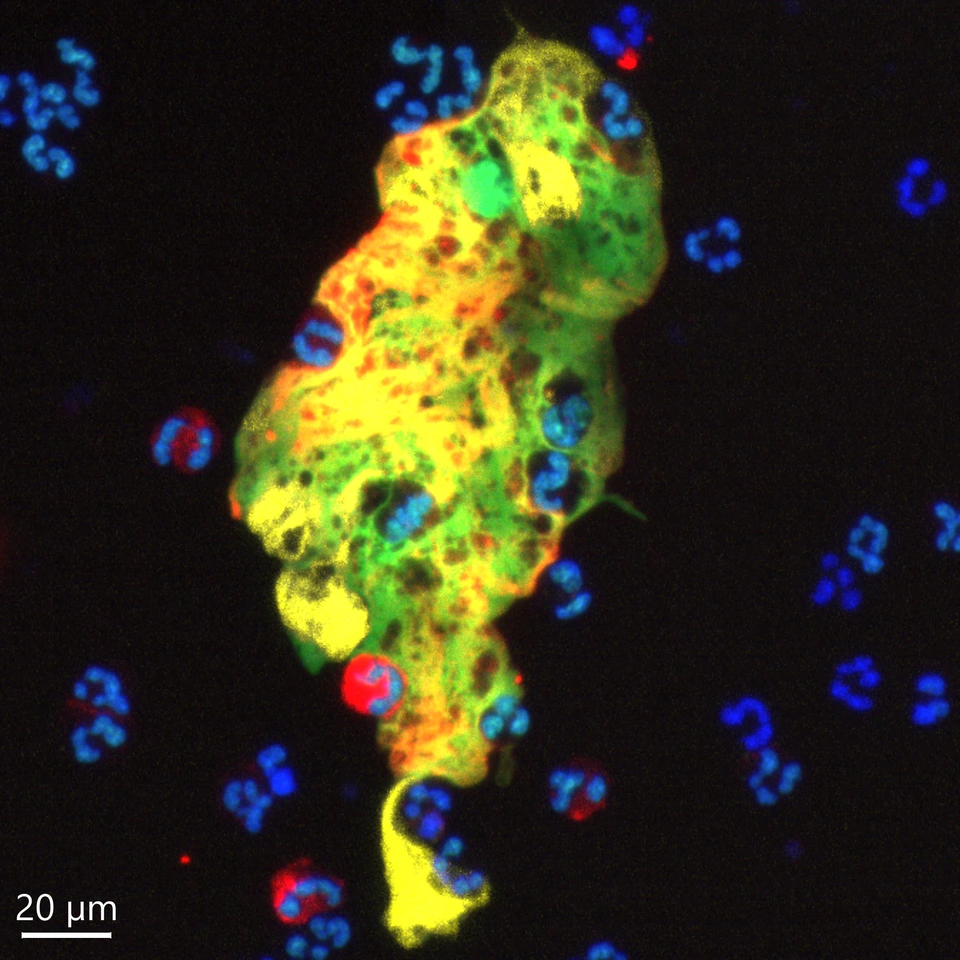
NET-Based Clinical
& Translational Profiling
![]()
![]()
![]()
![]()
![]()
![]()
Driven by
clinical utility.
- All listed application areas are at the research and evaluation stage. Some have not yet entered clinical validation and do not constitute medical diagnostic recommendations or clinical application commitments.
- The ImmunoGel platform has not received regulatory clearance from any competent authority for in vitro diagnostic use.
Built for clinical care.
Designed for bio-discovery.
ImmunoGel bridges rare-cell biology to clinical care,
translational research, and therapeutic development.
Partner With Us
Advance Patient Care.
Integrate blood-based MRD monitoring into your practice to proactively guide post-surgical care.
For Clinicians
Accelerate
Discovery.
Partner with us to generate multi-center validation data across solid tumor indications.
For Investigators
Empower CDx Development.
Utilize our reproducible ImmunoGel workflow to power companion diagnostic (CDx) development in your clinical trials.
For Biopharma
SOURCES
- Based on the WHO Global Cancer Observatory (GLOBOCAN 2022), approximately 19.96 million new cancer cases were diagnosed worldwide in 2022, displayed on this site as 19M+. This figure covers all cancer types at initial diagnosis and continues to grow with aging populations. Source: Bray et al., CA: A Cancer Journal for Clinicians, 2024.
- Post-surgical recurrence rate: pooled estimates across major solid tumor types (colorectal, lung, liver, etc.) indicate approximately 30% of patients who undergo curative-intent resection will experience local or distant relapse within five years. See Haller et al., Journal of Clinical Oncology, 2005 (CRC adjuvant therapy cohort, ~30% recurrence); Siegel et al., CA Cancer J Clin, 2024. Rates vary by cancer type and stage.
- Post-relapse mortality: per SEER data (2014-2020), five-year relative survival for distant-stage (Stage IV) solid tumors is approximately 20-35%, corresponding to a five-year mortality rate of 65-80%. The 65% figure displayed on this site represents a conservative lower-bound estimate across major cancer types. Source:Cancer Facts & Figures 2024, American Cancer Society.
- Distant-stage survival (3-30%): Liver cancer (3.5%) and ovarian cancer (30.8%) distant-stage five-year relative survival rates, based on NCI Surveillance, Epidemiology, and End Results (SEER) Program data. Colorectal cancer (14%) distant-stage five-year survival rate is sourced from the American Cancer Society, Cancer Facts & Figures 2024.
Localized-stage survival (>=90%): Colorectal cancer (91%) and ovarian cancer (93%) localized five-year relative survival rates, defined as tumor confined to the primary site with no regional or distant spread, sourced from the American Cancer Society & NCI SEER Program. All figures are population-level statistical estimates; individual prognosis is influenced by multiple clinical factors.
- Based on the WHO Global Cancer Observatory (GLOBOCAN 2022), approximately 19.96 million new cancer cases were diagnosed worldwide in 2022, displayed on this site as 19M+. This figure covers all cancer types at initial diagnosis and continues to grow with aging populations. Source: Bray et al., CA: A Cancer Journal for Clinicians, 2024.
- Post-surgical recurrence rate: pooled estimates across major solid tumor types (colorectal, lung, liver, etc.) indicate approximately 30% of patients who undergo curative-intent resection will experience local or distant relapse within five years. See Haller et al., Journal of Clinical Oncology, 2005 (CRC adjuvant therapy cohort, ~30% recurrence); Siegel et al., CA Cancer J Clin, 2024. Rates vary by cancer type and stage.
- Post-relapse mortality: per SEER data (2014-2020), five-year relative survival for distant-stage (Stage IV) solid tumors is approximately 20-35%, corresponding to a five-year mortality rate of 65-80%. The 65% figure displayed on this site represents a conservative lower-bound estimate across major cancer types. Source:Cancer Facts & Figures 2024, American Cancer Society.
- Distant-stage survival (3-30%): Liver cancer (3.5%) and ovarian cancer (30.8%) distant-stage five-year relative survival rates, based on NCI Surveillance, Epidemiology, and End Results (SEER) Program data. Colorectal cancer (14%) distant-stage five-year survival rate is sourced from the American Cancer Society, Cancer Facts & Figures 2024.
Localized-stage survival (>=90%): Colorectal cancer (91%) and ovarian cancer (93%) localized five-year relative survival rates, defined as tumor confined to the primary site with no regional or distant spread, sourced from the American Cancer Society & NCI SEER Program. All figures are population-level statistical estimates; individual prognosis is influenced by multiple clinical factors.